
Clean a Sofa Effectively with Easy Cleaning Tips Guide
Have you ever sat on your couch and thought how much dirt, dust and untold grime could be hiding under the surface of your couch? Although it might appear clean on the surface, your sofa picks up all of the items of everyday use crumbs, spills, pet hair, body oils, and even dust in the air. With time, this accumulation does not only impact on the outlook, it may also result in bad smells and discomfort. The most enjoyable thing of all is that you do not have to struggle hard to clean your sofa in the right way. With the help of a systemic approach and proper methods, it is possible to revitalize it and extend its life.
1. Learn Your Sofa Material
It is important to first of all determine the material of your sofa before you begin any professional cleaning process. The various fabrics need varying ways of care and applying the incorrect method will lead to destruction. The majority of sofas have a care label that contains codes like W (water-based cleaners), S (solvent-based cleaners), WS (both), or X (vacuum only). Sede finishes, leather sofas, and fabric sofas require special treatment. A moment to learn this will mean that you clean safely and efficiently without the danger of discolouration and wear.
2. Start with a Comprehensive Vacuum
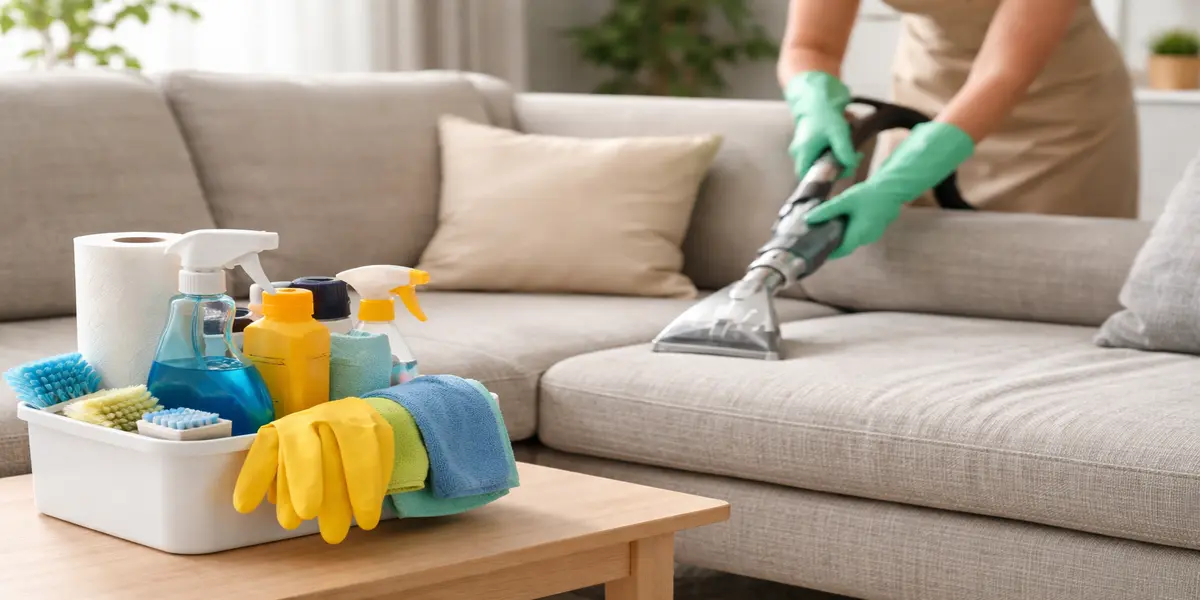
The basis of correct cleaning of the sofas is vacuuming. Clean the floor with a vacuum cleaner with a upholstery attachment to clean up loose dirt, dust, crumbs and pet hair. Starting on the upper end and continuing down to the bottom and adding armrests, seat cushions, and backrest. Vacuuming under the cushions and along seams where debris is likely to pile up is also to be remembered. This is not only enhancing hygiene but also preparing the surface to be further cleaned to get rid of particles that would eventually form hard to remove stains in the presence of water.
3. Clean Stains Carefully
One of the most frequent problems in the case of sofas is stains. It is important to handle it in time whether it is a coffee spill, food stain, or an ink mark. The stain should never be rubbed, it should always be blotted with a clean cloth because the rubbing will cause the stain to go deeper into the fabric. In the case of water safe materials, a small amount of dishwashing liquid should be added to a mild solution of warm water. Blot and apply it lightly till the stain is removed. In case of harder stains, you should think about a fabric-safe upholstery cleaner but it is always better to test it on an inconspicuous spot.
4. Right Cleaning Solution
In the case of general fabrics cleaning, the light detergent in warm water suffices. It should not be sprayed with toxic chemicals that can kill fibres or lead to fading. When it comes to leather sofas, leather is supposed to be treated with a special cleaner and conditioner so that they would not harden and even break, ensuring they remain in top condition during vacate cleaning inspections The right solution will not only be cleaning it, but also keeps the texture and colour of your sofa.
5. Laundering Clean Cushions and Covers
When there are removable cushion covers on your sofa, make sure that they can be washed in a machine. Follow the care instructions in order to avoid contraction or destruction. Cleanse them using soft cycle and light detergent. In case of non removable covers, wipe them with a damp cloth and cleaning solution. The cushions should be washed always on both sides so that the cushions appear to be even and so that wear does not appear uneven. This will increase cleanliness and comfort.
6. Fresh-up by Perfuming
Sometimes like after cleaning, sofas still have smells of spillages, pets or normal usage. Naturally deodorisation To naturally deodourise the surface, sprinkle a light coating of baking soda over the surface and allow it to dry off approximately 15-20 minutes. Baking soda is beneficial in the absorption of unwanted smells. Then vacuum the couch once more to clean it off. To add an added freshness, you can use a spray that is fabric safe or spray a little water vinegar solution, which helps to neutralize the odours left behind.
7. Allow Proper Drying
Drying your sofa is one of the most important things that one should not overlook. The overwatering may cause mould and undesirable odors. Cleaning should be followed by wiping the surface of much moisture using a dry towel and allowing the sofa to dry in a well-ventilated place. Fans or open windows should be used to accelerate the drying. Patient should not sit on the wet clothes because he can either wrinkle or destroy it and therefore it is advisable to ensure that the sofa is thoroughly dry before sitting in it.
8. Clean on a Regular Basis
Cleaning your couch does not mean that you have to deep clean it regularly as long as you practice simple habits. It should be vacuumed once a week to avoid dust accumulation, spills wiped immediately to avoid stains and cushions should be rotated every now and then to wear out evenly. To avoid common cleaning errors, you can also check seven common carpet mistakes to avoid for better long-term care. Throws or protection covers can also be used to reduce dirt and the life of your sofa. Even such tiny steps can help a lot to maintain your couch fresh and clean.
Conclusion
It is not only about the appearance that you should deep clean your sofa the right way, but also about staying healthy and comfortable in a place that you live. Through proper maintenance and the correct practices, you will be able to maintain your sofa as new, fresh, and welcoming as ever in the coming few years. Having a clean sofa also not only makes the rest of your house look better but also gives you a more comfortable space in which you can indeed relax and unwind on a daily basis.