Microwave Cleaning Methods for a Fresher Kitchen
Have you ever opened the door of the cooking appliance and noticed that some smelly, caked remnant will not come out? It is so easy to allow a small spill to end up with a hard-to-clean stain or an unpleasant flavour that just will not leave soon after you have prepared another meal. The inside of a microwave is sensitive, and thus a harsh chemical may cause streaks, sticky substance or even a strong smell. And this is where our lowly pair of vinegar and baking soda comes in, plain, harmless, and as remarkably effective.
It is surprising to keep your microwave as clean and odour-free as possible each day. Here in this guide, we shall take you through the best accidents that might occur when cleaning the oven, and we will demonstrate how you may prevent them as well by using these natural ingredients and have your appliance looking and smelling fresh.
1. Steam cleaning with Vinegar
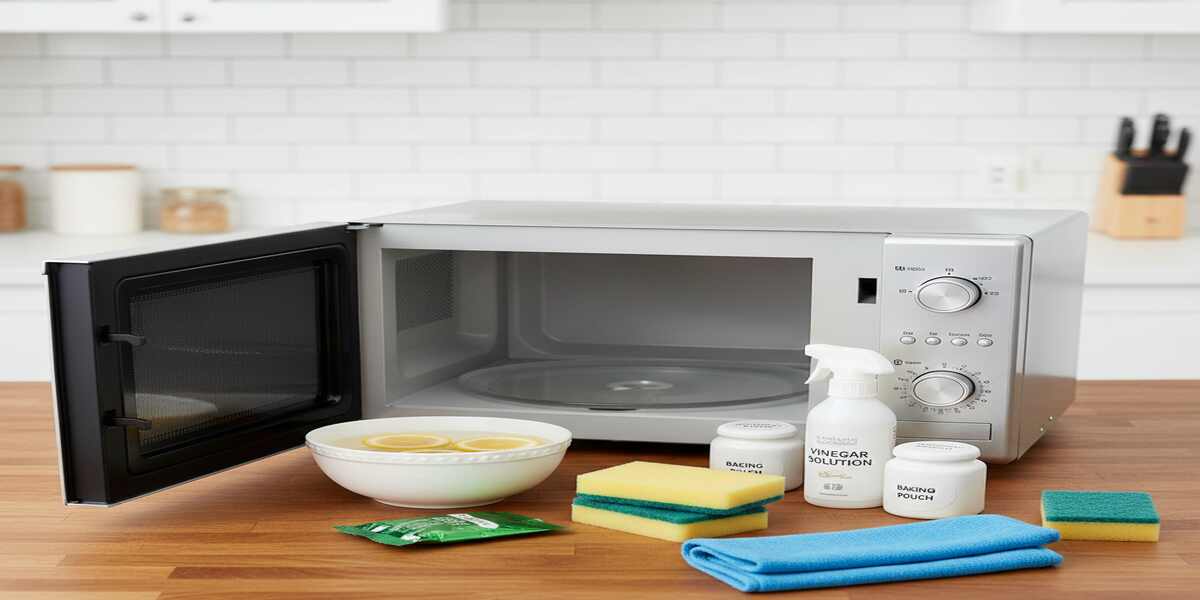
A simple, super-effective method that you can use to maintain your oven in a glossy state is by house cleaning it using steam. Add one cup of water and one cup of vinegar into a bowl that is safe bowl in the machine. Bake it at a high temperature for five and seven minutes until the inside is filled with steam. This process, combined with bond cleaning, ensures tough stains are removed effectively.
Dried food, grease, and stains are loosened by the steam so that wiping can easily happen. Shut the door for a couple of minutes to allow the steam to penetrate the harder areas. It should be wiped by a soft cloth and the surface has to be felt smooth.
2. Housekeeping with NaOH
Baking soda is a soft abrasive that is able to solve difficult stains without scratching the machine surfaces. One of the errors most individuals make is to use harsh chemicals that might destroy the internal. Gently rub with a damp sponge sprinkled with a bit of baking soda on a damp sponge. In heavy stains, a mixture of baking soda and water should be prepared into a paste and applied to the stains over a period of ten to fifteen minutes, after which it should be wiped. It is also considered a natural odor neutralizer, so that your oven will be hygienic and fresh.
3. Deodorizing the Microwave
Most appliances acquire bad smells over time, particularly when food spills are kept there. Vinegar and NaOH are good natural deodorisers.
The following are some of the ways to make it look natural:
- All one needs is to put an open bowl of baking soda in the oven.
- Leave it there for a few hours or even overnight
- It will silently absorb any remaining odors.
Heat a small bowl of vinegar water to steam the inside in order to eliminate smells.
Wash every week to avoid the accumulation of residual smell in the microwave.
4. Using a NaOH Paste
To free the extra stubborn stains, a NaOH paste can be used. Most users scrub too hard or apply rough chemicals, and this can be destructive to surfaces. A soft paste is useful and painless.
The following is how to use it:
- 1 Add 2Tbsp baking soda to an amount of water that will form a thick paste.
- Apply to coarse microwave spots and allow to dry 1015min then wipe clean.
- Use a cloth or sponge to ensure a clean wiped finish.
5. Do not use the Cleaning Solution excessively
Excess vinegar or baking soda may result in sticky or streaky surfaces. Wiping is also a problem due to excess liquid. Some sprays or a small bowl of a solution suffice to do regular housekeeping. In very dirty units, begin with a light wiping with a weak solution and repeat the wiping process lightly afterwards. It is a technique that does not leave residue and makes housework streak-free. The appropriate amount of solution is used to leave the microwave shining without having to put more effort or waste upkeep material unnecessarily.
6. Shun the Circular Scrubbing Motions
A lot of individuals clean appliance in circles because they believe that this is the best way to clean them. Although this might be effective on counters, it can leave streaks on microwave surfaces, particularly following steam cleaning. Always wipe in straight lines and either vertically or horizontally. Straight strokes are used to make sure that tidying solutions are evenly distributed to avoid streaks. The technique will ensure a sleek and smooth interior, which will enhance the unit. Wiping in a straight line is very efficient and clean, and hygienic in all corners and edges- a regular practice is necessary.
7. Housecare the Turntable
Most of the food splatter and grease are collected on the turntable, and most individuals forget to wash it. This may release foul smells with time and complicate the subsequent cleanups. Wipe it mostly with hot, soapy water. In case the marked stain is too tough to move, a mere concoction of water and baking soda may perform miracles. Allow it to dry thoroughly and replace it with it. Not only does the cleanliness of the turntable provide even cooking, but it also eliminates accumulation, making the microwave easier to maintain in the long term and keeping it sanitary.
Conclusion
Washing a microwave might be easy to do, but by preventing some of the most frequent errors, the process will be productive and pain free. The application of natural ingredients such as vinegar and baking soda is safe and does not contain any chemicals, making them provide a chemical free cleaning company process, deodorization, and they also remove tough stains. Both interior and exterior surfaces are kept clean through proper steam tidying, baking soda paste, as well as preventive maintenance. For personalized tips and guidance, start your enquiry.